
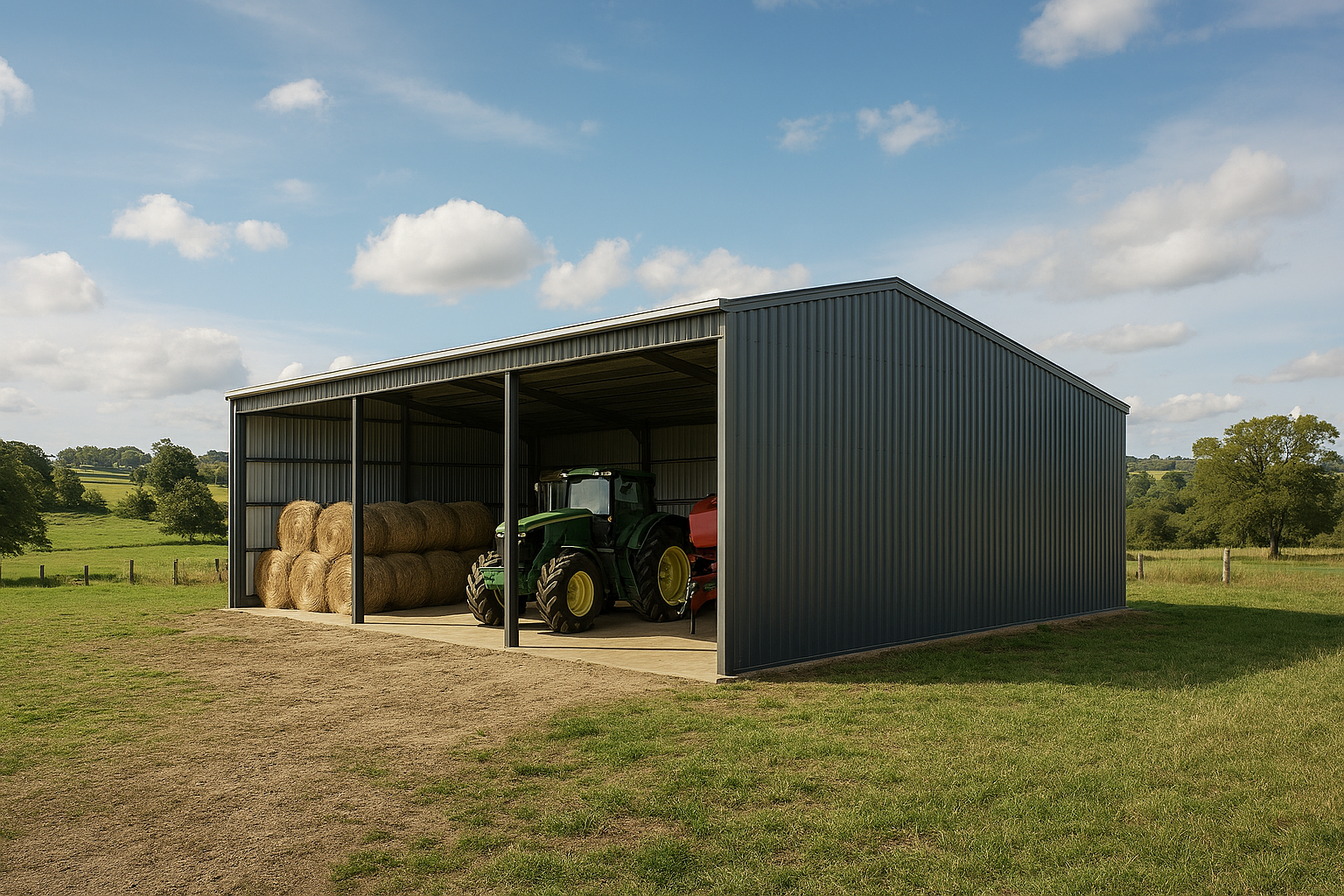
If you run a farm, you already know that “making do” has a cost. Hay left exposed to the weather loses value. Machinery stored outside ages faster. Day-to-day jobs take longer when storage does not fit the way your operation actually works.
That is why a purpose-built shed is not simply another capital expense. In many cases, it is a practical investment in efficiency, asset protection, and fewer long-term headaches. Research on hay storage, machinery care, and farm safety all points in the same direction: better storage pays back in more ways than one.
Table of contents
- What makes a farm shed “purpose-built”
- How the right shed protects your most valuable assets
- Why layout matters as much as size
- The long-term financial case
- Features worth prioritising before you build
- A smarter way to plan for the next decade
What makes a farm shed “purpose-built”?
A purpose-built shed is designed around how your farm actually operates, rather than forcing your operation to fit a generic structure.
That means thinking beyond square metres alone. It includes:
- The machinery you need to house
- The type of feed or produce you want to protect
- Access points for trucks, utes and loaders
- Clearance height for current and future equipment
- Ventilation, drainage and site positioning
- Safe storage zones for fuels, tools or chemicals
For example, a farm storing round bales, fertiliser, and machinery has very different needs from one focused mainly on workshop use and covered parking. A standard building might still provide shelter, but it often creates bottlenecks, wasted space, or limited access that slows everything down.
That is why many landowners start by looking at purpose-designed farm sheds that match their workflow, rather than adapting a cheaper, off-the-shelf option later.
How the right shed protects your most valuable assets
One of the clearest reasons to invest in a purpose-built shed is simple: it protects what you have already paid for.
Take hay as an example. Ohio State University notes that uncovered hay storage losses can exceed 30%, while other guidance shows weather exposure reduces both dry matter and feed quality. In real terms, that means part of your feed budget is lost before it is ever used.
Machinery tells a similar story. Penn State Extension notes that equipment such as balers and combines can deteriorate quickly if stored outdoors over several seasons. Sun, moisture, and general exposure may not destroy an asset overnight, but they will shorten its lifespan and increase maintenance costs.
A well-designed shed can help you protect:
- Feed from rain, mould risk and avoidable spoilage
- Machinery from sun, corrosion and weathering
- Tools and consumables from moisture damage
- Fuel and related materials in a safer, more organised way
This is also where layout matters. Good farm sheds are not only about keeping things dry. They make it easier to separate feed, machinery, workshop space and potentially hazardous materials so the building supports safer, smoother farm routines. WorkSafe New Zealand’s guidance on farm safety and fuel storage reinforces the value of clear risk management and well-organised storage areas.
Why layout matters as much as size
A bigger shed is not always a better shed.
Many farms run into trouble because the footprint looks fine on paper, but the internal flow does not work in practice. Doors may be too narrow, traffic paths overlap, or there is not enough turning room for loaders and trailers.
A purpose-built shed plans for movement, not just storage.
| Consideration | Generic shed | Purpose-built shed |
| Machinery clearance | May be tight or restrictive | Sized for your actual fleet |
| Internal flow | Often an afterthought | Planned around daily movement |
| Feed storage | General space only | Can be designed for access and protection |
| Safety zones | Limited separation | Easier to zone fuel, tools and work areas |
| Future expansion | Harder to adapt | More likely to allow for growth |
This matters because friction in a farm layout adds up. A few extra minutes every day to move gear, shift bales, reverse awkwardly or work around poor access does not feel dramatic in the moment. Over a season, it becomes lost time, added stress and unnecessary wear on equipment.
The long-term financial case
The easiest mistake to make is judging a shed by build cost alone.
A better question is: what does the wrong shed cost you over five, ten or fifteen years?
That cost may show up as:
- Feed losses from poor storage
- Faster depreciation of machinery
- Extra repairs and maintenance
- Slower handling and labour inefficiency
- The need for alterations or add-ons later
- Reduced flexibility as your operation changes
In other words, the return on investment is not just about direct revenue. It is also about avoided loss.
That is especially relevant in New Zealand, where farms operate in conditions shaped by rainfall extremes, exposure and climate-related variability. NIWA notes that rainfall extremes can disrupt productive land use, which makes resilient infrastructure more important over time.
When you look at the shed as part of your operating system, not just as a building, the case becomes clearer.
Features worth prioritising before you build
Not every farm needs the same design, but a few features are usually worth thinking through early:
1. Access and door placement
Think about your largest vehicle, not your average one. Future-proofing matters here.
2. Ventilation and moisture control
Good airflow can help protect stored feed and reduce moisture issues. Guidance on hay storage consistently highlights weather protection and ventilation as key to reducing loss.
3. Site drainage
A good shed on a poor site still creates problems. Water movement around the building matters almost as much as the roof above it.
4. Flexible internal space
Your needs may change. A shed that supports multiple uses can hold its value better over time.
5. Safe separation of materials
Fuel, chemicals, tools and workshop functions should be thought through properly. WorkSafe’s guidance is a useful reminder that storage decisions are also safety decisions.
A smarter way to plan for the next decade
The best farm investments do more than solve today’s problem, they make the next ten years easier.
A purpose-built farm shed can do exactly that. It helps protect valuable assets, reduce avoidable loss, improve daily workflow, and create a more organised, resilient operation. It is not just about having more cover, but having the right cover in the right place, designed for how you actually farm.
When a shed is planned properly, it stops being a passive structure and becomes useful infrastructure, and that is where the real value lies.
Comments are closed.